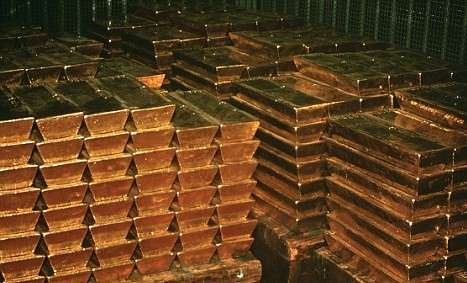
The Lost Gold of Libya . In 2011, as foreign interventions and internal armed conflict brought an end to Muammar Gaddafi’s four-decade rule in Libya, one of the most remarkable financial mysteries of the 21st century was set into motion. Prior to the fall of Tripoli, Libya held one of the largest official gold reserves on the African continent—approximately 143 metric tons of pure gold bullion, valued at over $6 billion at the time.
Unlike the gold reserves of many developing nations, which are frequently deposited in Western central banks such as the Federal Reserve Bank of New York or the Bank of England, Gaddafi insisted on storing Libya’s sovereign treasure domestically inside secure underground vaults in Tripoli and Sebha.
However, in the chaos following the 2011 NATO-backed military intervention and the collapse of the Libyan state, this vast fortune vanished from official state records. Decades later, no formal international forensic audit has ever publicly accounted for where 143 tons of gold went, giving rise to persistent questions regarding resource security, geopolitical motives, and international finance.
The Pan-African Gold Dinar: Gaddafi’s Financial Ambition
To understand the strategic significance of Libya’s gold, one must examine Gaddafi’s broader economic vision for the African continent during the late 2000s.
Gaddafi proposed establishing a unified African central bank and introducing a single, gold-backed currency: the Pan-African Gold Dinar. The concept was straightforward yet economically transformative:
- Bypassing the US Dollar and Euro: African oil-exporting nations and resource-rich states would trade crude oil, minerals, and agricultural commodities exclusively in Gold Dinars rather than US dollars (petrodollars) or euros.
- Ending Financial Reliance on Western Institutions: By backing a continental currency with physical gold reserves held within Africa, the initiative sought to shield African nations from Western monetary inflation, foreign exchange volatility, and international debt traps.
- Uniting African Economies: A gold-backed currency would create an economic bloc capable of competing directly with major Western financial centers.
With 143 tons of unencumbered sovereign gold stored safely within Libyan borders, Tripoli was positioned to serve as the initial liquidity anchor for this proposed monetary system.
The Lost Gold of Libya – The 2011 Intervention and the Fall of Tripoli
In early 2011, civil unrest broke out across Libya, prompting a swift response from international bodies. In March 2011, the United Nations Security Council passed Resolution 1973, authorizing a military intervention led by NATO forces under the mandate of protecting civilians.

Over the following months, heavy airstrikes crippled Libyan military infrastructure, allowing armed rebel coalitions—grouped under the National Transitional Council (NTC)—to advance on key strategic locations. In August 2011, rebel forces entered Tripoli and secured state infrastructure, including government ministry buildings and central banking vaults.
Shortly after the regime fell, international media outlets and financial analysts turned their attention to the state’s physical reserves. However, initial audits conducted by transitional authorities and foreign advisors revealed a baffling discrepancy: the bulk of Libya’s official gold reserves had disappeared.
The Vanishing Act: Where Did 143 Tons of Gold Go?
143 tons of gold bullion is not an easily transportable asset. In physical terms, such a quantity represents thousands of standard 400-ounce bars, weighing as much as multiple commercial freight shipping containers. Transporting, storing, or liquidating a reserve of this size requires extensive logistical planning, heavy transport vehicles, and specialized security personnel.
Several theories have emerged regarding how and when the gold vanished from official state ledgers:
- The Tactical Liquidation Theory: Some reports suggest that during the final months of the siege, regime officials attempted to liquidate portions of the gold bullion into local or regional paper currency to pay military salaries and maintain state supply lines. However, local cash markets could only absorb a tiny fraction of 143 tons without triggering massive market disruptions.
- Desert Transport and Cross-Border Smuggling: Another hypothesis posits that armed convoys moved the gold southward into the Sahara Desert toward Sebha, eventually crossing unpoliced desert borders into neighboring nations such as Niger, Chad, or Sudan.
- Seizure by Foreign Entities or Rebel Factions: A third narrative suggests that upon taking control of Tripoli’s central vaults, specific rebel militias or foreign intelligence teams secured the physical bullion directly, quietly transferring it out of the country before formal civil accounting could take place.
Despite the scale of the loss, no comprehensive, binding international investigation was ever launched by the United Nations or global financial institutions to trace the physical movement or eventual destination of Libya’s sovereign gold.
The Geopolitical Unraveling: A Summary of Events
To understand how a sovereign state reserve of this magnitude disappeared during a political transition, consider the key timeline events surrounding the 2011 crisis:
| Phase | Key Historical Event | Financial & Geopolitical Impact |
| Pre-2011 | Gaddafi secures 143 tons of gold in domestic vaults | Accumulates $6B+ in gold to launch the Pan-African Gold Dinar. |
| March 2011 | UN Resolution 1973 & NATO military intervention | Libyan state infrastructure and vault defenses are compromised. |
| August 2011 | Fall of Tripoli to opposition forces | Rebel factions and international teams take control of central vaults. |
| Post-2011 | Post-war audits reveal missing gold reserves | 143 tons of gold vanish from ledgers; no international inquiry opened. |
Resource Freedom vs. Economic Absorption
The disappearance of Libya’s gold reserves represents far more than an unsolved high-value heist; it carries profound implications for global monetary policy and national sovereignty.
For developing nations, the story of Libya’s gold serves as a stark historical lesson regarding sovereign wealth storage. Storing wealth in physical gold outside the traditional Western banking clearing networks provided Libya with temporary independence from foreign asset freezes. However, without stable domestic security structures, physical gold stored in-country remains vulnerable to direct physical seizure during times of military crisis.
The wealth that could have funded a new era of regional monetary independence was quietly absorbed into dark markets and unrecorded accounts, leaving post-2011 Libya struggling with currency devaluations, liquidity shortages, and ongoing political fragmentation.
Over a decade after the fall of Tripoli, the fate of Muammar Gaddafi’s 143 tons of sovereign gold remains shrouded in silence. Neither international banking authorities nor successive Libyan governments have provided a definitive accounting of the missing bullion.
Whether lost to desert smuggling routes, absorbed by regional warlords, or secured behind closed doors during the 2011 transition, Libya’s lost gold remains a haunting reminder of how rapidly national wealth can vanish when geopolitical stability collapses.