The Unsolved Murder of Tristan Brübach . On March 26, 1998, the city of Frankfurt, Germany, became the site of one of the most chilling and perplexing unsolved homicides in modern European history. Thirteen-year-old Tristan Brübach, a quiet schoolboy, left his class early that afternoon complaining of a backache.
Hours later, his body was discovered inside a pedestrian tunnel along the Liederbach stream in the district of Höchst. The extreme brutality of the assault, combined with surgical precision and the total absence of a clear motive, shocked the public and initiated one of the largest cold case investigations in German police history. Decades later, despite thousands of leads and extensive DNA profiling, the identity of the perpetrator remains unknown.
The Timeline of March 26, 1998
Tristan Brübach was a student at the Meister-Anton-Straße school in Frankfurt-Höchst. On the day of his murder, he was granted permission to leave school early at approximately 1:20 PM due to lower back pain. Rather than going straight home, witnesses reported seeing him in the vicinity of the Höchst railway station, a common local transit hub.
At around 1:50 PM, Tristan was seen sitting on a bench near the station, talking with an unidentified man. Observers noted nothing visibly alarming about the interaction at the time, leading investigators to suspect that the perpetrator may have established rapport with Tristan or lured him under a false pretext.
Between 3:20 PM and 3:30 PM, Tristan walked toward the Liederbach tunnel, a concrete pedestrian culvert passing underneath the railway tracks near the Bruno-Asch-Anlage park. Shortly after he entered the tunnel, the attack occurred.
At approximately 3:30 PM, three teenagers walking near the tunnel entrance noticed suspicious activity and heard noises inside. Upon looking in, they spotted a man bent over a prone body. Startled by the teenagers’ presence, the man immediately fled the scene on foot, heading toward the nearby railway lines and park area. The witnesses alerted authorities, and police arrived at the scene within minutes, but the assailant had already disappeared into the surrounding urban landscape.
Analysis of the Crime Scene and Injuries
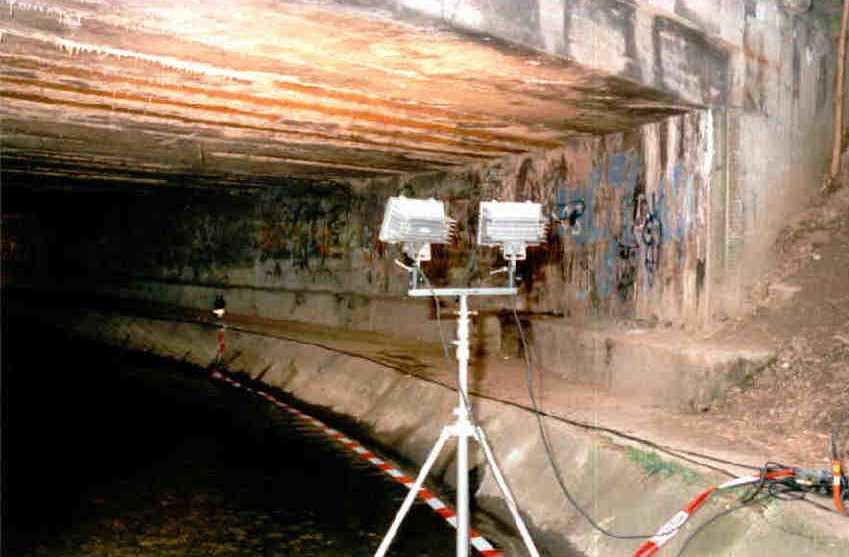
- When police entered the Liederbach tunnel, they found Tristan’s body lying in the shallow water of the culvert. The forensic examination revealed an extraordinary degree of violence and post-mortem manipulation:
- Cause of Death: Tristan had been rendered unconscious by strangulation before his throat was severely cut down to the spine.
- Surgical Mutilation: The assailant used a extremely sharp instrument to precisely excise specific portions of tissue from the victim’s body, including parts of both thighs, buttocks, and testicles.
- Absence of Blood at the Scene: Despite the severity of the wounds, forensic investigators noted a surprising lack of major blood spatter inside the tunnel, suggesting the killer acted with calculated speed or utilized specific techniques to control blood flow.
- Missing Items: The severed body parts were taken from the scene by the killer and have never been recovered. Additionally, Tristan’s blue school backpack was missing from the immediate vicinity.
The combination of blunt trauma, strangulation, sharp force trauma, and targeted tissue extraction led forensic pathologists to conclude that the killer possessed either specialized anatomical knowledge, experience with butchery, or surgical familiarity.
The Missing Backpack and Subsequent Evidence
Several weeks after the murder, on March 24, 1999—nearly a full year later—Tristan’s missing backpack was unexpectedly discovered by a hiker in a forest area near Niedernhausen, roughly 25 kilometers (15 miles) northwest of the crime scene.
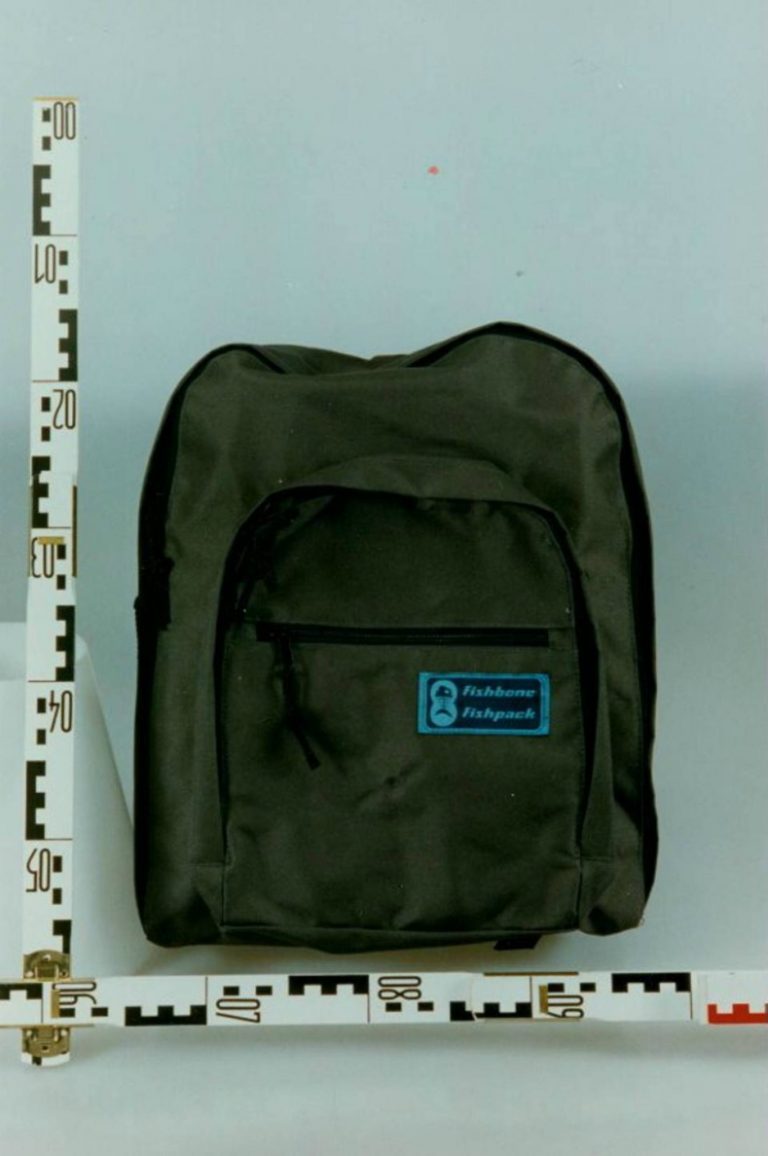
Inside the backpack, police found Tristan’s personal school materials, but also key physical evidence:
- Fingerprints and DNA: Investigators recovered partial fingerprints and contact DNA from the backpack and its contents. Crucially, a fingerprint found on an exercise notebook inside the bag did not match Tristan or any of his known acquaintances, leading police to believe it belonged directly to the murderer.
- Czech Dictionary: Found inside the backpack was a Czech-German dictionary. The book contained handwritten names and annotations that did not belong to Tristan or his family. This led investigators to explore potential links to the Czech Republic or foreign nationals living or working in the Frankfurt area.
Despite extensive forensic testing, including cross-referencing the partial profile against national and international criminal databases (including Interpol), no match was ever generated.
The Unsolved Murder of Tristan Brübach -Suspect Profiles and Witnesses
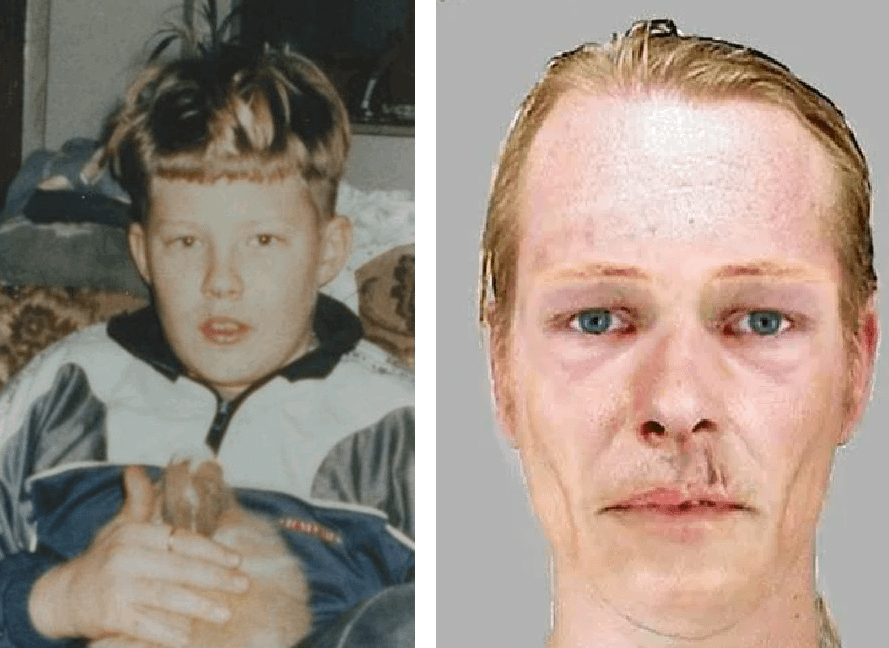
In the immediate aftermath of the crime, police compiled a detailed composite sketch based on descriptions provided by the three teenagers who interrupted the attack, as well as other witnesses who saw a man near the railway station.
Physical Description of the Primary Suspect:
- Age: Approximately 20 to 30 years old at the time of the crime (born roughly between 1968 and 1978).
- Height: Between 175 cm and 180 cm (5’9″ to 5’11”).
- Build: Slim to medium build.
- Distinguishing Features: Pale skin, unkempt blond or light-brown hair, and a visible scar or skin discoloration above the upper lip.
- Attire: Dark clothing, possibly a dark jacket or sweater, and worn shoes.
Over the years, several theoretical profiles were developed by criminal psychologists and the Federal Criminal Police Office (BKA):
- The Local Resident Theory: The speed with which the killer executed the crime, secured the tissue samples, and escaped through the complex railway network suggests an intimate familiarity with the Frankfurt-Höchst area.
- The Medical/Butchery Background: The precision of the incisions raised hypotheses that the suspect had training as a butcher, surgeon, medical student, or mortician.
- The Traveling Offender: The proximity of the crime scene to major rail lines and Frankfurt Airport opened the possibility that the perpetrator was a transient worker, long-distance commuter, or international traveler.
Major Investigative Efforts and Cold Case Status
The investigation into Tristan Brübach’s murder became one of the most comprehensive in German history. Special commissions (Sonderkommission Tristan) processed over 20,000 individual leads, collected thousands of voluntary DNA samples from local residents, and reviewed decades of cold cases across Europe for similar modus operandi.
In 2014, the case gained renewed public attention when investigators re-examined potential connections to other high-profile serial crimes in Europe, though no definitive link was established. Advanced forensic technologies, including modern touch-DNA analysis and genealogical profiling, continue to be applied to the preserved physical evidence as testing capabilities evolve.
Under German law, homicide (murder) carries no statute of limitations, meaning the case remains open indefinitely. A permanent reward of €20,000 remains active for information leading to the identification and conviction of the perpetrator.
The murder of Tristan Brübach remains a profound criminal mystery—a daylight attack in a public corridor that left behind physical evidence, witness descriptions, and distinct forensic markers, yet yields no answer to the fundamental question of who killed him.