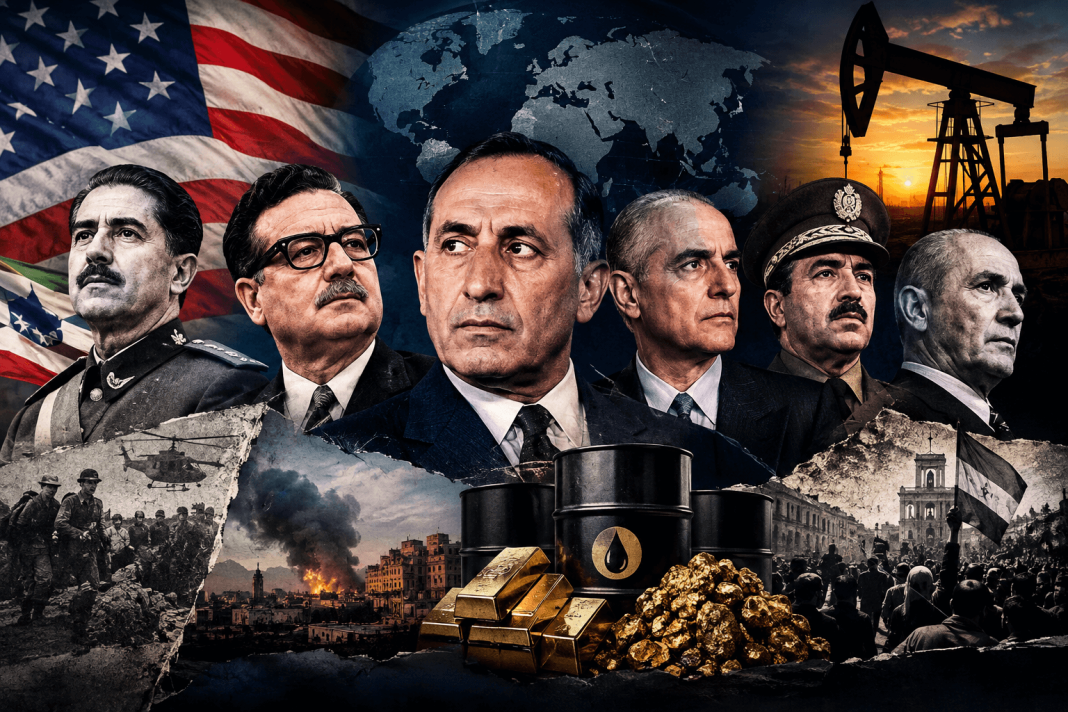
7 Leaders Who Stood Against the USA . Throughout the 20th and 21st centuries, the global balance of power has been heavily shaped by foreign policy doctrines emanating from Washington, D.C. While official diplomatic narratives often frame interventions around the promotion of democracy, human rights, and regional stability, historical records and declassified intelligence documents reveal a far more pragmatic primary objective: the protection of strategic economic interests, resource dominance, and the global financial order.
When sovereign nations elected leaders who chose national self-determination over alignment with Western economic models, the consequences were often swift and catastrophic. From nationalizing key domestic industries like oil and copper to threatening the hegemony of the U.S. dollar, those who attempted to break free from foreign influence frequently paid the ultimate price.
This detailed exploration examines seven historical cases where local leadership directly confronted American geopolitical dominance—and suffered tragic national and personal outcomes.
1. Guatemala (1954): Jacobo Árbenz and the Protection of Corporate Profits – 7 Leaders Who Stood Against the USA

In the early 1950s, Guatemala was a country defined by massive inequality, where a majority of the indigenous population lived in poverty while foreign corporations owned vast swathes of arable land. Elected in a democratic process, President Jacobo Árbenz introduced Decree 900, a series of agrarian reform laws designed to redistribute uncultivated land to poor peasant farmers.
To make the reform equitable, the Guatemalan government offered financial compensation to landowners based on the tax values declared on official public records. However, the largest landholder in the country was the Boston-based United Fruit Company (now Chiquita Brands International). For decades, United Fruit had severely undervalued its land holdings on municipal tax ledgers to avoid local taxation. When Árbenz offered compensation matching their declared tax value rather than their inflated internal estimates, the corporation lobbied top American officials for immediate covert action.
The U.S. government orchestrated Operation PBSUCCESS, a CIA-led intelligence and psychological warfare campaign. Within ten days, Árbenz was overthrown, forced into exile, and replaced by a succession of military dictatorships. The consequences for Guatemala were devastating: agrarian reform was instantly rolled back, civil liberties were crushed, and a brutal 36-year civil war was triggered, resulting in the massacre and disappearance of more than 200,000 citizens—primarily indigenous Maya farmers—to safeguard corporate interests.
2. Iran (1953): Mohammad Mosaddegh and the Battle for National Oil – 7 Leaders Who Stood Against the USA
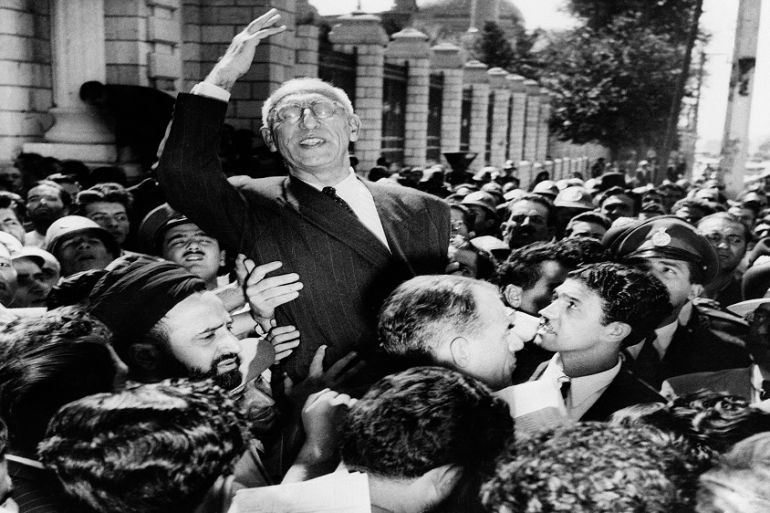
Prior to 1951, Iran’s vast petroleum reserves were controlled almost exclusively by the Anglo-Iranian Oil Company (AIOC), a enterprise that transferred the majority of its profits directly to London while leaving the Iranian populace in economic stagnation. Dr. Mohammad Mosaddegh, a highly popular nationalist politician who was democratically elected as Prime Minister, made the bold decision to nationalize Iran’s oil industry to fund domestic public infrastructure, education, and healthcare.
In response, the British government imposed a naval embargo on Iranian oil exports and sought assistance from Washington. The result was Operation Ajax, a joint CIA and MI6 covert operation designed to destabilize the democratic government. Intelligence agents organized bribed mobs, paid street gangs to riot, funded opposition newspapers, and orchestrated military uprisings.
Mosaddegh was overthrown in August 1953, spent the remainder of his life under house arrest, and democracy was systematically dismantled. The United States reinstated the Shah of Iran, Mohammad Reza Pahlavi, as an absolute monarch. The Shah ensured Western access to Iranian petroleum for the next quarter-century, but his brutal secret police force, SAVAK, created a climate of repression that directly fueled the radical 1979 Islamic Revolution—the repercussions of which dominate Middle Eastern geopolitics to this day.
3. Chile (1973): Salvador Allende and the Destruction of Democratic Socialism – 7 Leaders Who Stood Against the USA
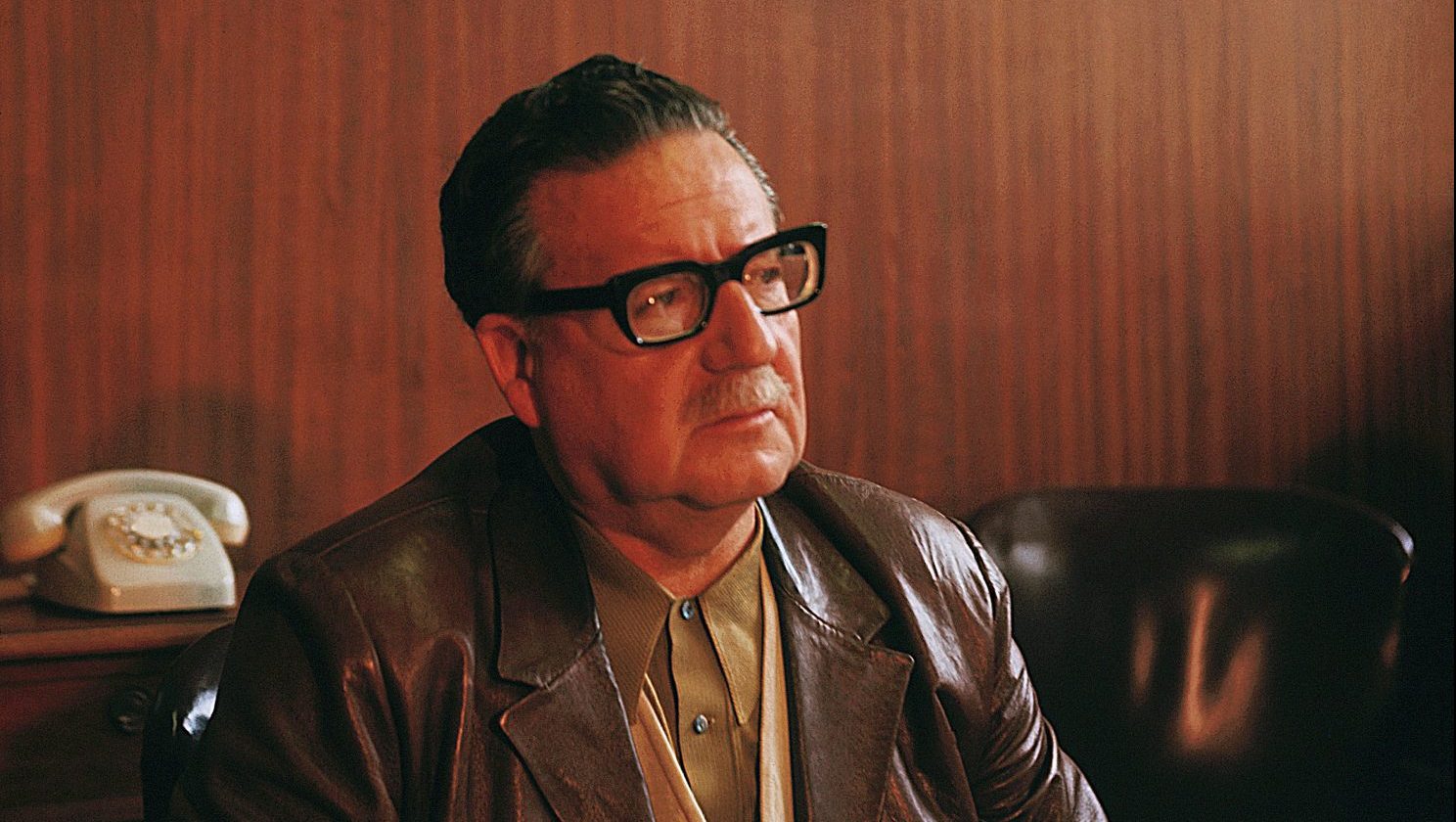
On September 4, 1970, Marxist politician Salvador Allende was elected President of Chile, running on a platform aimed at reforming the national economy through democratic means. Once in office, Allende moved to nationalize major domestic sectors, most notably the massive copper mining industry, which was heavily controlled by U.S.-based multinational conglomerates such as Anaconda and Kennecott.
The U.S. administration viewed Allende’s democratic socialism as a direct threat to capital interests in Latin America and feared a potential domino effect throughout the hemisphere. Official policy directed intelligence agencies to disrupt the Chilean economy, covertly fund opposition groups, and cultivate ties with dissident elements within the Chilean military.
On September 11, 1973, General Augusto Pinochet led a bloody military coup against the civilian government. As the presidential palace came under aerial bombardment and ground assault, President Allende delivered a final legendary radio broadcast to the Chilean people before taking his own life rather than surrendering. Pinochet’s brutal regime seized control, suspending the constitution, shutting down parliament, and implementing a military dictatorship during which over 30,000 civilians were executed, tortured, or permanently disappeared.
4. Vietnam (1955–1975): Ho Chi Minh and the Domino Theory War – 7 Leaders Who Stood Against the USA
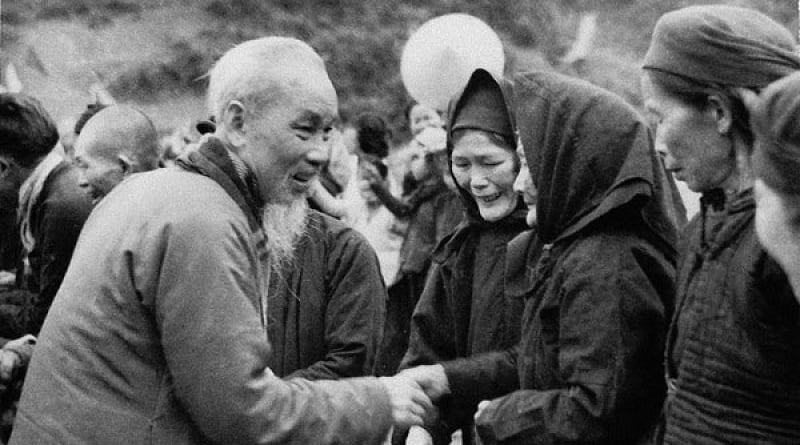
Following the end of World War II, Vietnamese nationalist leader Ho Chi Minh sought independence from decades of French colonial rule. Although Ho initially appealed to the United States for diplomatic recognition, citing the American Declaration of Independence, Washington viewed the struggle strictly through the lens of Cold War containment ideology.
Fearing that a communist, independent Vietnam would inspire similar independence movements across Southeast Asia—a doctrine known as the “Domino Theory”—the U.S. intervened to support the authoritarian South Vietnamese government and ultimately engaged in a full-scale direct military conflict.
Over two decades, the United States dropped more explosive tonnage on Vietnam, Laos, and Cambodia than was used by all combatants combined during World War II. Millions of military personnel and civilians lost their lives, and vast tracts of pristine agricultural land and rainforest were contaminated by chemical defoliants like Agent Orange. Despite immense firepower and human loss, the determination of the Vietnamese forces to secure unified national sovereignty ultimately forced a complete U.S. withdrawal in 1975.
5. Iraq (2003): Saddam Hussein, Weapons of Mass Destruction, and Petroleum – 7 Leaders Who Stood Against the USA
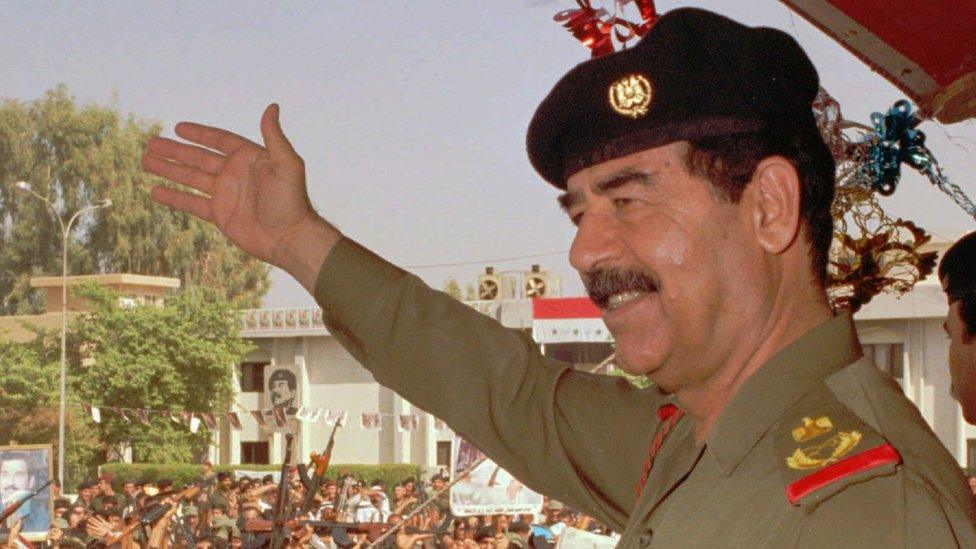
In March 2003, the United States launched a massive invasion of Iraq, claiming that President Saddam Hussein possessed active stockpiles of Weapons of Mass Destruction (WMDs) and maintained ties to transnational terror networks. Despite extensive international inspections by the United Nations prior to the invasion, no operational WMDs were ever discovered.
Critical geopolitical analysts highlight that Iraq sat atop the world’s second-largest proven crude oil reserves, representing billions of dollars in underground natural wealth. Prior to the invasion, Saddam Hussein had moved to nationalize oil contracts, award concessions to non-Western firms, and shift Iraq’s oil pricing currency from the U.S. dollar to the Euro, directly challenging the petrodollar recycling mechanism that underpins global American financial leverage.
The invasion quickly brought down the Iraqi regime, leading to the capture and execution of Saddam Hussein. However, the subsequent dismantling of state institutions plunged Iraq into protracted sectarian warfare, destabilized the entire Middle East, and led to the rise of violent extremist factions. The conflict claimed hundreds of thousands of civilian lives and permanently reshaped the regional power balance.
6. Libya (2011): Muammar Gaddafi and the Pan-African Gold Dinari – 7 Leaders Who Stood Against the USA
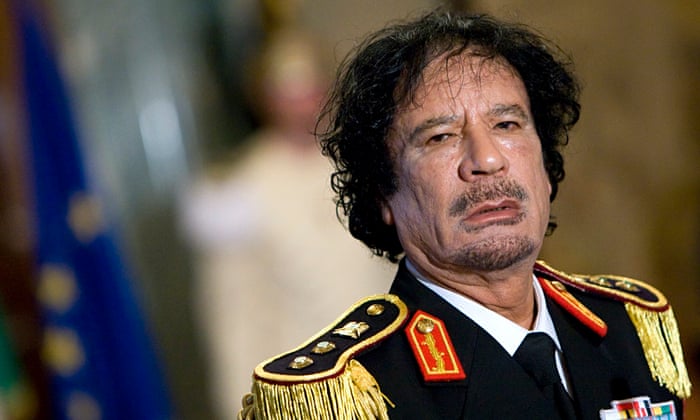
For decades, Muammar Gaddafi ruled Libya with an authoritarian hand, using the nation’s vast hydrocarbon wealth to build one of the highest standards of living in Africa. By 2011, Libya possessed no foreign debt, held vast sovereign wealth reserves, and enjoyed abundant oil profits.
Prior to the 2011 NATO intervention, Gaddafi was actively advocating for a unified African continent utilizing a single, gold-backed currency: the African Gold Dinar. This financial movement aimed to bypass the French CFA franc and the U.S. dollar in regional oil transactions, potentially offering African nations economic independence from Western banking systems and institutions like the International Monetary Fund (IMF).
During the Arab Spring revolts in 2011, NATO forces launched an extensive military bombing campaign citing the Protection of Civilians under UN Resolution 1973. The air campaign allowed rebel forces to overwhelm state military units, culminating in the public capture and extrajudicial execution of Gaddafi. Following his fall, Libya descended into state collapse, experiencing years of ongoing civil conflict, lawlessness, and the tragic emergence of open-air slave trading markets in former urban centers.
7. Afghanistan (2001–2021): Mineral Wealth, Strategy, and the Twenty-Year Conflict

In October 2001, following the attacks of September 11, the United States invaded Afghanistan to dismantle Al-Qaeda networks and overthrow the ruling Taliban regime that harbored them. While initial objectives were framed around global anti-terrorism, the intervention gradually expanded into a decades-long nation-building enterprise.
Beyond its strategic location bordering Central Asia, Iran, and China, geological surveys conducted by the U.S. Geological Survey revealed that Afghanistan possessed unexploited critical mineral reserves—including rare earth elements, copper, iron, cobalt, and vast deposits of lithium essential for modern electronics—estimated at over $1 trillion. Furthermore, the country occupied vital trade corridors historically crucial for Asian land logistics.
Despite spending over $2 trillion and maintaining a heavy military presence for twenty years, the intervention failed to establish a self-sustaining political infrastructure. In August 2021, American forces executed a rapid and chaotic withdrawal, leaving the nation as the Taliban swept back into power overnight, re-establishing their rule over a severely impoverished nation.