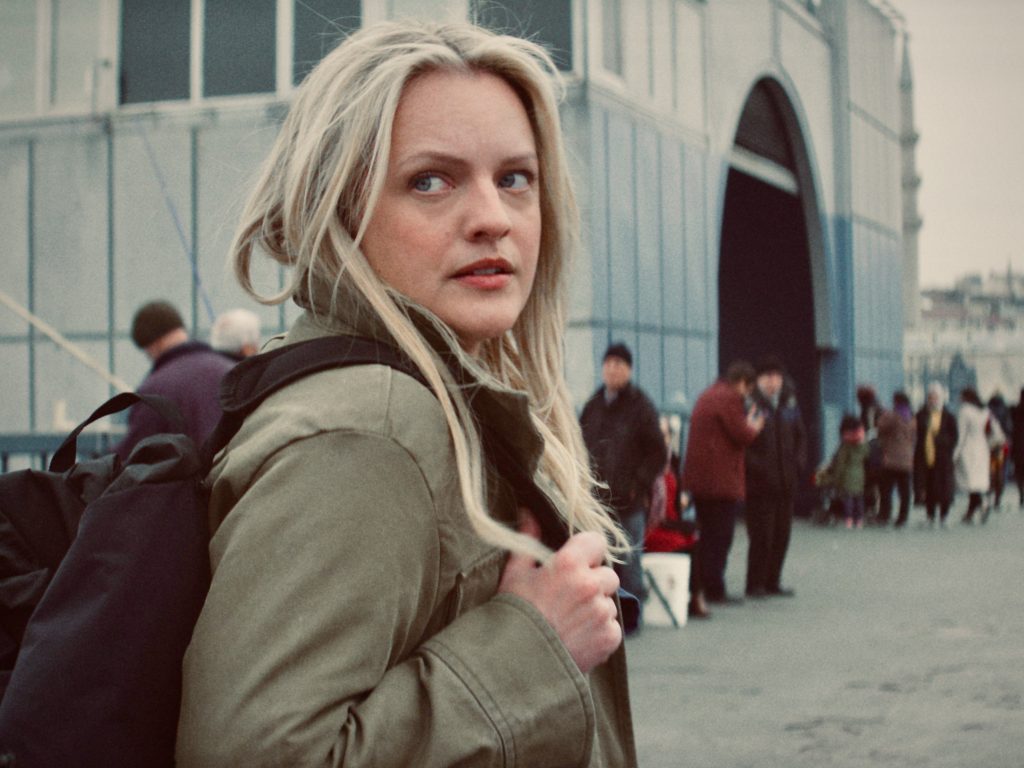
Elisabeth Moss and Her Career-Defining Roles . Few performers have shaped the landscape of 21st-century prestige television and psychological cinema quite like Elisabeth Moss. Widely regarded as the undisputed queen of modern screen drama, Moss has built a legendary career by fearlessly tackling characters defined by emotional survival, systemic rage, and complex interiority. Her singular ability to convey unspoken narrative depth through raw, unfiltered facial expressions has redefined what audiences expect from a dramatic lead.
Below is an extensive breakdown of eight career-defining roles that showcase why Elisabeth Moss stands among the greatest actresses of her generation.
1. The Handmaid’s Tale (2017–Present)
- Role: June Osborne / Offred
- Significance: The Cultural Phenomenon and Television Tour de Force
In the television adaptation of Margaret Atwood’s dystopian novel The Handmaid’s Tale, Elisabeth Moss delivers a transformative performance as June Osborne, a woman forced into reproductive servitude in the totalitarian regime of Gilead. As both the lead actress and an executive producer (and frequent director), Moss anchors the entire emotional weight of the series.
Her portrayal is famous for its extreme close-ups, where subtle twitches of the eyes and jaw convey fiery defiance beneath a submissive facade. Rather than portraying June as a saintly victim, Moss embraces the character’s growing ruthlessness, moral gray areas, and psychological scars as she transitions from a desperate survivor into a vengeful revolutionary. The role earned Moss a Primetime Emmy Award for Outstanding Lead Actress in a Drama Series, solidifying her status as a titan of modern television.
2. Mad Men (2007–2015)
- Role: Peggy Olson
- Significance: The Ultimate Career-Woman Arc
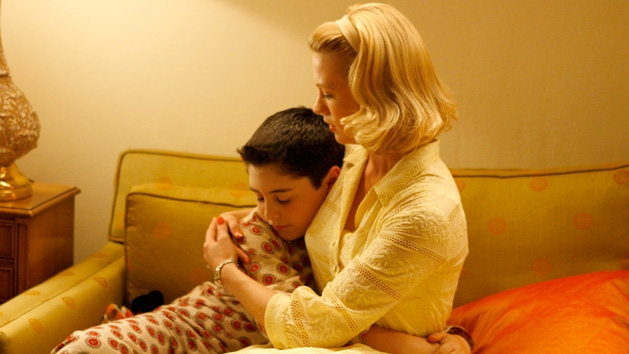
Matthew Weiner’s critically acclaimed 1960s period drama Mad Men introduced audiences to one of the most compelling character arcs in television history. Starting as a quiet, naive secretary at the Sterling Cooper advertising agency, Peggy Olson gradually breaks through the era’s pervasive sexism to become a formidable copy chief.
Moss played Peggy with extraordinary subtlety over seven seasons, charting her maturation, personal sacrifices, and professional triumphs. The character’s iconic walk down the Sterling Cooper & Partners hallway in Season 7—sunglasses on, cigarette dangling from her lip, holding a box of her belongings and a painting of a octopus—remains one of the most celebrated visuals in modern TV history. Moss received six Emmy nominations for her groundbreaking work on the show.
3. The Invisible Man (2020)
Role: Cecilia Kass
Significance: Modern Horror Masterclass and Trauma Exploration
In director Leigh Whannell’s high-concept reimagining of H.G. Wells’ classic monster story, Moss plays Cecilia Kass, a woman attempting to rebuild her life after escaping an abusive relationship with an optics scientist. When her ex-partner allegedly dies and leaves her a fortune, a series of terrifying occurrences leads Cecilia to believe he has rendered himself invisible to hunt her.
Moss turns a potential jump-scare creature feature into a harrowing, claustrophobic study of domestic abuse, gaslighting, and post-traumatic stress disorder. Much of the film requires Moss to act against empty space, convincing the audience through sheer physical commitment that an unseen physical entity is terrorizing her. Her frantic energy and fierce survival instinct elevated the film into a massive critical and commercial success.
4. Top of the Lake (2013–2017)
Role: Detective Robin Griffin
Significance: Dark Noir Excellence Under Auteur Direction
Created and directed by Academy Award-winner Jane Campion, Top of the Lake provided Moss with an opportunity to delve into mystery-thriller territory. Playing Robin Griffin, an Australian detective specializing in sexual assault cases, Moss investigates the disappearance of a pregnant 12-year-old girl in a remote, claustrophobic New Zealand town.
Moss adopted an authentic Australian accent for the role and delivered a haunting, deeply atmospheric performance. As Detective Griffin uncovers the town’s dark secrets, she is forced to confront buried trauma from her own past. Moss’s vulnerability and quiet strength earned her a Golden Globe Award for Best Actress in a Miniseries or Television Film.
5. Us (2019)
- Role: Kitty Tyler / Dahlia
- Significance: Stealing Scenes in Jordan Peele’s Doppelgänger Thriller
In Jordan Peele’s acclaimed psychological horror film Us, Moss demonstrated her exceptional versatility in a supporting dual role. She plays Kitty Tyler, a superficial, wine-sipping wealthy mother, as well as Dahlia, Kitty’s sinister, blade-wielding “Tethered” doppelgänger.
Despite limited screen time compared to the lead cast, Moss delivers one of the most memorable sequences in the film. As Dahlia, she applies lip gloss over her sliced, bloody face while staring into a mirror with a terrifying mix of vanity and malice. The scene highlighted Moss’s gift for dark humor and unsettling physical acting within the horror genre.
6. The One I Love (2014)

- Role: Sophie
- Significance: Indie Sci-Fi Surrealism
Directed by Charlie McDowell, The One I Love is an inventive indie romantic mystery starring Elisabeth Moss and Mark Duplass. The film follows a couple struggling in their marriage who retreat to a quiet vacation home recommended by their therapist, only to discover a bizarre, mirror-dimension phenomenon hidden in the guest house.
Moss delivers a finely tuned performance, navigating the micro-dynamics of a collapsing marriage alongside the surreal demands of the film’s sci-fi premise. Her chemistry with Duplass and her ability to play subtle variations of the same character make the film a gripping study of intimacy, idealization, and romantic disappointment.
7. Her Smell (2018)
- Role: Becky Something
- Significance: Unfiltered Punk-Rock Mania
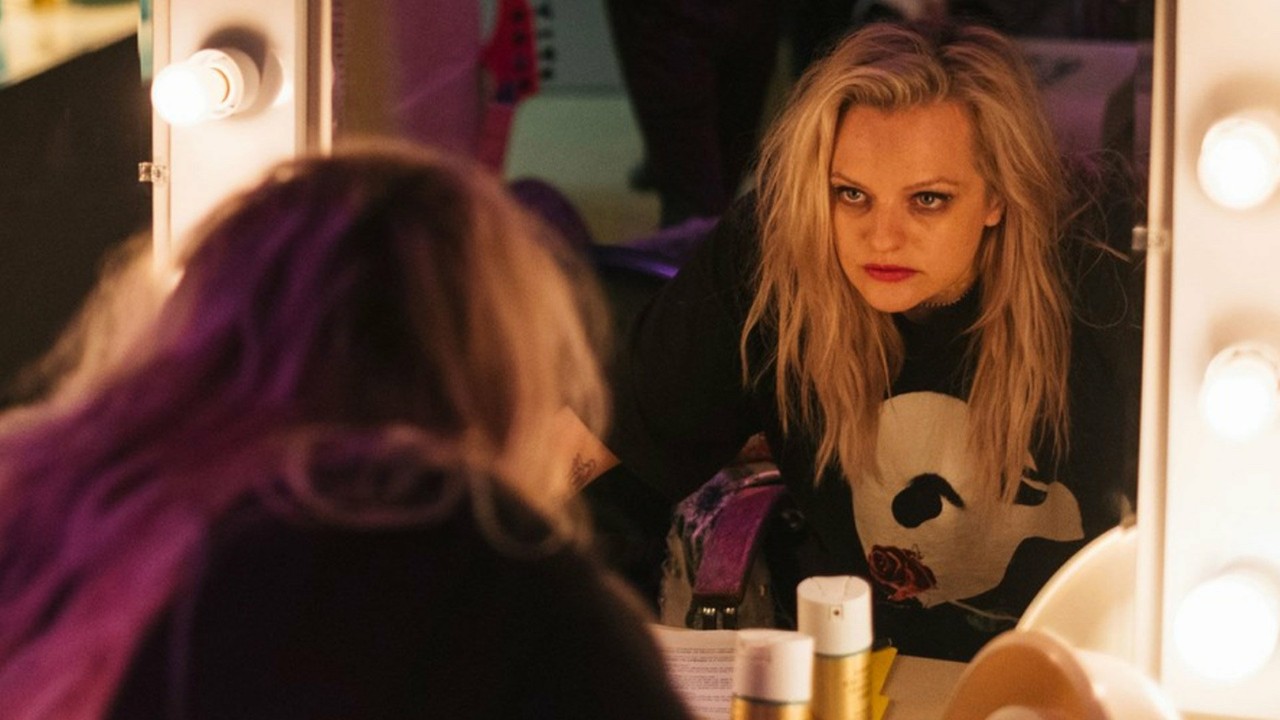
In writer-director Alex Ross Perry’s intense character drama Her Smell, Moss takes on one of the most abrasive and demanding roles of her career. She plays Becky Something, a self-destructive 1990s riot-grrrl rock star spiraling through severe drug addiction, paranoia, and manic outbursts as her band falls apart around her.
Divided into long, real-time acts that feel like high-pressure theatrical stages, the film relies entirely on Moss’s willingness to be intensely unlikable and chaotic. Yet, during a pivotal scene where a sobering Becky plays Bryan Adams’ “Heaven” on a piano for her young daughter, Moss strips away the chaos to reveal heartbreaking tenderness, earning rave reviews from film critics.
8. The Square (2017)
- Role: Anne
- Significance: International Satire and Cannes Palme d’Or Winner
Director Ruben Östlund’s razor-sharp Swedish satire The Square took home the prestigious Palme d’Or at the Cannes Film Festival. Moss features as Anne, an American art journalist living in Stockholm who has an absurd, uncomfortable romantic encounter with a museum curator (played by Claes Bang).
Moss showcases her incredible comedic timing in high-tension, cringe-inducing situations. The scene following their night together—which devolves into a bizarre power struggle over who gets to dispose of a used condom—is a masterpiece of social awkwardness, showcasing Moss’s comfort in international art-house cinema.
Comparative Overview of Elisabeth Moss’s Landmark Roles
To highlight the dramatic range across her career, the table below compares these iconic performances across genre, character motivation, and key acclaim:
| Title | Year | Character | Genre / Format | Primary Character Motivation |
| Mad Men | 2007–2015 | Peggy Olson | Period Drama / TV | Professional autonomy and creative ambition |
| Top of the Lake | 2013–2017 | Robin Griffin | Crime Noir / TV Miniseries | Justice for victims and personal healing |
| The One I Love | 2014 | Sophie | Sci-Fi Romance / Feature Film | Reconnecting with romantic idealization |
| The Square | 2017 | Anne | Satirical Comedy / Feature Film | Professional duty and personal validation |
| The Handmaid’s Tale | 2017–Pres. | June Osborne | Dystopian Drama / TV | Survival, rescue of her child, and revenge |
| Her Smell | 2018 | Becky Something | Musical Drama / Feature Film | Artistic control and recovery from addiction |
| Us | 2019 | Kitty Tyler / Dahlia | Psychological Horror / Film | Social status (Kitty) / Total replacement (Dahlia) |
| The Invisible Man | 2020 | Cecilia Kass | Horror Thriller / Feature Film | Escape from psychological abuse and gaslighting |
Elisabeth Moss and Her Career-Defining Roles – The Architectural Blueprint of an Elisabeth Moss Performance
When examining why Moss consistently delivers performances that capture critical and public acclaim, four recurring elements define her acting signature:
- The Power of Non-Verbal Subtext: Moss is a master of the silent camera hold. Where other actors rely on scripted dialogue to communicate feeling, Moss uses micro-expressions—a subtle shift in eye focus, a clenching jaw, or a trembling breath—to tell an entire story without speaking a word.
- Refusal to Sanitise Female Emotions: Throughout her career, Moss has rejected passive or overly idealized portrayals of women. Whether playing an addict (Her Smell), a vengeful survivor (The Handmaid’s Tale), or an ambitious career woman (Mad Men), she leans into messiness, anger, flawed choices, and moral complexity.
- Fearless Physical Commitment: From undergoing grueling physical sequences in The Invisible Man to enduring cold, wet location shoots in Top of the Lake, Moss brings an intense physical realism to her roles that grounds even the most surreal storylines in tangible truth.
- Auteur Partnership Selection: Moss consistently chooses to work with visionary directors—including Jane Campion, Jordan Peele, Ruben Östlund, Alex Ross Perry, and Leigh Whannell—who push the boundaries of visual and narrative storytelling.
Elisabeth Moss Among Modern Acting Greats
When evaluating the current era of screen acting, Elisabeth Moss shares space with extraordinary contemporaries like Viola Davis, Cate Blanchett, Toni Collette, and Sarah Paulson. However, Moss’s unique niche lies in her unmatched ability to bridge long-form episodic television with daring indie and studio feature films.
Her work on Mad Men helped define the Golden Age of Television in the late 2000s, while The Handmaid’s Tale proved that streaming platforms could produce television events of immense cultural resonance. Simultaneously, her leading roles in films like The Invisible Man demonstrated that artistic depth and commercial box-office success can coexist seamlessly in modern genre cinema.
As Elisabeth Moss continues to expand her footprint as a director, producer, and performer, her filmography stands as a testament to the power of courageous, uncompromising storytelling.