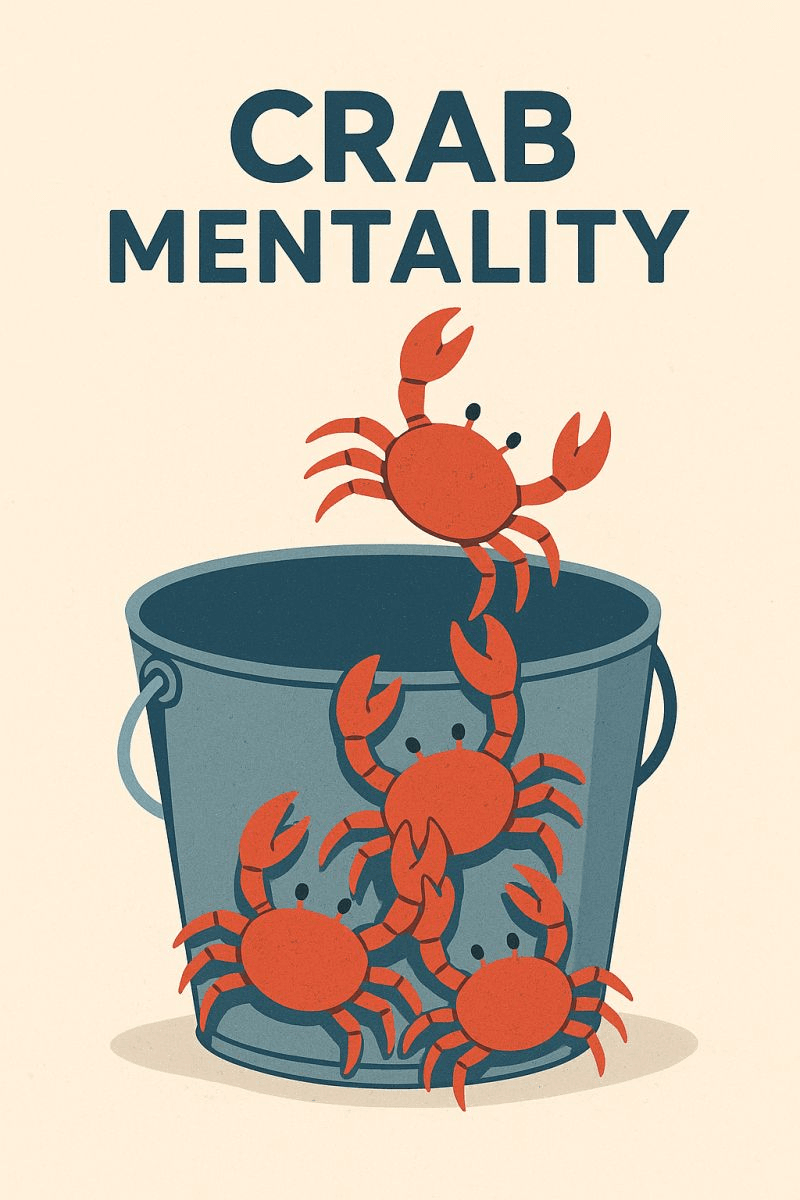
Crab Mentality Explained . Have you ever shared exciting news about a new job promotion, a personal achievement, or a ambitious goal, only to be met with subtle criticism, discouragement, or outright sabotage from people close to you? If so, you have experienced a pervasive psychological and social phenomenon known as the crab mentality (often summarized by the phrase “if I can’t have it, neither can you”).
Rooted in envy, insecurity, and zero-sum thinking, this behavioral pattern affects workplaces, social circles, families, and entire communities. Recognizing how this mindset operates is the first critical step toward protecting your ambitions and fostering healthy, supportive relationships.
Understanding the Origin: The “Crabs in a Bucket” Metaphor
The term “crab mentality” derives from a well-known observation made by fishermen when harvesting live crabs.
When a single crab is placed inside a tall bucket, it can easily use its claw strength to climb up the sides and escape to freedom. However, when multiple crabs are placed together in the same bucket, an intriguing and destructive group dynamic emerges. As soon as one crab begins climbing toward the rim, the other crabs below will reach up, grab onto it, and drag it back down to the bottom.
In the end, none of the crabs escape—not because the bucket is impossible to climb, but because the collective group actively prevents any single individual from succeeding. In human psychology, this metaphor describes individuals or groups who attempt to diminish, halt, or sabotage the progress of anyone trying to improve themselves or stand out.
The Psychological Root Causes of Crab Mentality
Why do people engage in behavior that harms others without bringing any real benefit to themselves? Psychologists identify several underlying emotional and cognitive triggers:
- Deep-Seated Insecurity and Envy: Seeing someone else achieve success often acts as a mirror, reflecting an individual’s unfulfilled potential or lack of effort. Rather than feeling inspired, insecure individuals feel threatened, using criticism to protect their fragile self-esteem.
- Zero-Sum Bias: People with a crab mentality view success as a finite resource. They falsely believe that if someone else gains wealth, recognition, or happiness, there is automatically less available for everyone else.
- Fear of Abandonment or Change: In close-knit social groups or family settings, one person’s self-improvement can trigger a fear among peers that the rising individual will outgrow them, change their social dynamic, or leave the group behind.
- Scarcity Mindset: A belief that opportunities are inherently limited drives individuals to compete destructively rather than collaborate constructively.
Crab Mentality Explained – Common Signs of Crab Mentality in Everyday Life
Crab mentality is not always overt or aggressive; it frequently manifests through subtle passive-aggressive behaviors:
- Dismissive Comments: Downplaying someone’s hard-earned achievements by attributing them purely to “luck,” favoritism, or external circumstances.
- Backhanded Compliments: Offering praise paired with subtle insults (e.g., “It’s great you got that promotion, but don’t you think you’ll be too stressed?”).
- Spreading Gossip: Undermining a successful peer’s reputation behind their back to diminish their standing within a team or social group.
- Unsolicited Negativity: Immediately pointing out potential flaws, risks, or reasons why an ambitious project or dream will fail, disguised as “being realistic.”
- Active Sabotage: Withholding critical information, offering bad advice, or placing obstacles in the path of someone striving for progress.
Crab Mentality Explained – The Cost of Crab Mentality in Workplaces and Communities
When left unchecked, the crab mentality causes severe structural harm across personal and professional environments:
- Workplace Culture: Toxic team dynamics stifle innovation. When employees fear being torn down by jealous colleagues for excelling, they default to mediocrity and quiet quit, lowering overall organizational productivity.
- Community Growth: In tight-knit communities, social pressure to conform can prevent young individuals from pursuing higher education or unconventional career paths, perpetuating cycles of stagnation.
- Mental Well-being: High achievers surrounded by negative peers often experience imposter syndrome, anxiety, burnout, and guilt regarding their own success.
How Crab Mentality Operates vs. A Growth-Oriented Community
To better understand the contrast between toxic social dynamics and supportive environments, consider the key differences below:
| Aspect / Trait | Crab Mentality (Toxic Environment) | Growth-Oriented Community |
| Reaction to Success | Resentment, jealousy, and subtle sabotage | Celebration, genuine happiness, and inspiration |
| Core Belief | Scarcity (“If you win, I lose”) | Abundance (“Rising tides lift all boats”) |
| Communication Style | Backhanded compliments, gossip, hyper-criticism | Constructive feedback, encouragement, open dialogue |
| Group Goal | Enforce conformity and keep everyone equal at the bottom | Empower individuals to reach their highest potential |
Actionable Strategies to Overcome and Avoid Crab Mentality
If you suspect you are being targeted by a crab mentality—or want to ensure you don’t inadvertently display these traits yourself—apply these practical strategies:
- Practice Selective Sharing
You are under no obligation to share early goals, financial milestones, or personal ambitions with people who habitually respond with negativity. Share your wins with trusted individuals who genuinely celebrate your growth. - Establish Strong Emotional Boundaries
Recognize that other people’s negative reactions to your progress are reflections of their internal insecurities, not your worth or capabilities. Politely disengage from toxic conversations and refuse to internalize unconstructive criticism. - Surround Yourself with an Abundance Community
Seek out mentors, peer groups, and professional networks composed of high-value, growth-oriented individuals. Being surrounded by people who celebrate success creates a healthy environment where mutual encouragement thrives. - Foster an Abundance Mindset Within Yourself
To avoid falling into a crab mentality yourself, actively practice celebrating the achievements of others. View peer success not as a defeat, but as proof that success is possible and attainable through dedicated effort.
Rising Above the Bucket
The crab mentality is a reflection of fear, insecurity, and perceived limitation. While you cannot control how others react to your personal growth, you have complete control over who you allow into your inner circle and how you respond to negativity.
By cultivating self-awareness, protecting your ambitions, and surrounding yourself with supportive peers, you can climb out of any restrictive bucket and build a life defined by continuous progress and success.