Top 5 Biggest Robberies of All Time . The Psychology and Mechanics of High-Stakes Crimes
Throughout history, human ingenuity, precise logistics, and sheer audacity have occasionally combined to pull off crimes that seem almost fictional. Beyond the realm of Hollywood cinema and crime novels, real-world heists have targeted central bank vaults, diamond strongrooms, and fortified transit vehicles, netting sums that reach into the tens or hundreds of millions of dollars.
While some of these crimes were executed using high-tech subterfuge and criminal stealth, others relied on blunt military authority or months of physical tunneling under busy city streets. These heists stand as legendary chapters in criminal history not only because of the staggering sums involved, but also because many of the perpetrators vanished into thin air, leaving stolen fortunes unrecovered to this day.
5. The Great Train Robbery (1963) — The Blueprint of Rail Heists
On August 8, 1963, a 15-member criminal ring led by Bruce Reynolds executed what would become known as “The Great Train Robbery” at Sears Crossing in Buckinghamshire, England.
Intercepting the Royal Mail
The gang targeted a Royal Mail train traveling overnight from Glasgow to London, which was carrying millions of pounds in used banknotes. Using rigged signal lights along the railway tracks, the robbers forced the train conductor to stop in a remote area.
The Escape and Cultural Legacy
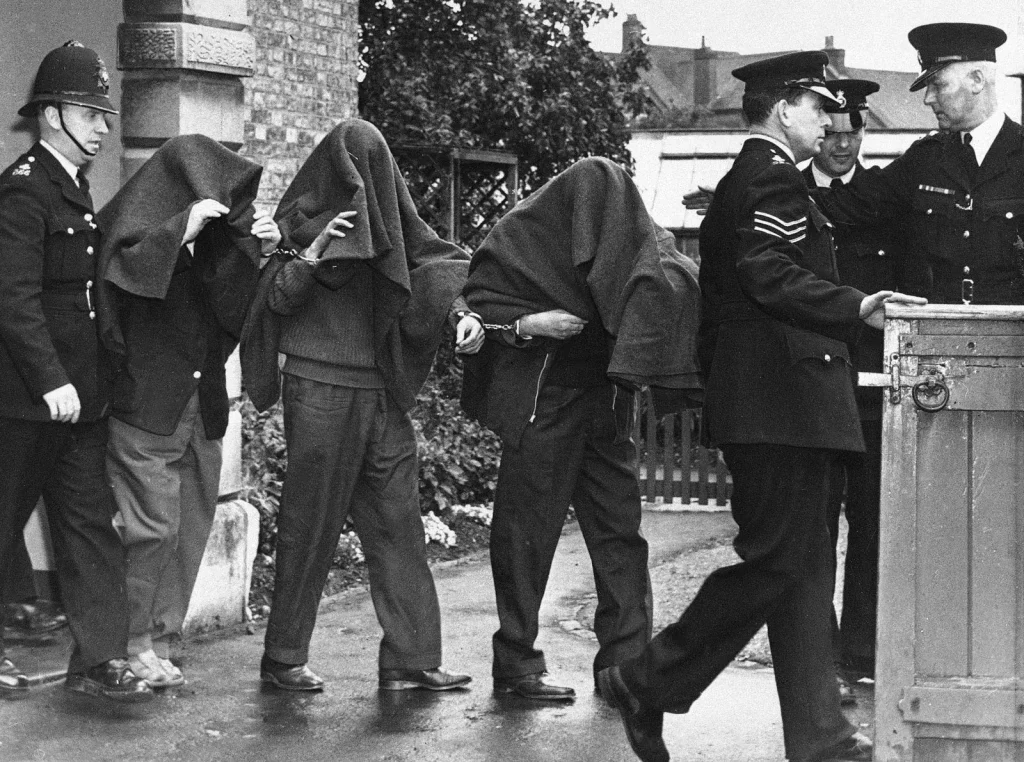
The crew uncoupled the engine and high-value mail cars, forcing the driver to move the train down the line to Bridego Bridge, where a team loaded 120 sacks of cash into waiting trucks. The crew escaped with £2.6 million—an unprecedented sum in 1963, equivalent to tens of millions today.
Although police tracked down the gang’s hideout at Leatherslade Farm via fingerprints left on a Monopoly board, key figures like Ronnie Biggs escaped from prison and spent decades on the run, turning the heist into a classic piece of modern folklore.
4. Securitas Depot Robbery (2006) — Britain’s Biggest Cash Heist
On the night of February 21, 2006, a heavily armed gang perpetrated the largest cash robbery in British history at the Securitas cash handling depot in Vale Road, Tonbridge, Kent.
Tactical Kidnapping and Hostage Takeover
To gain entry into the heavily fortified facility, the gang disguised themselves as police officers and pulled over the depot manager on a local highway. Simultaneously, another team abducted the manager’s wife and eight-year-old child from their home, holding them hostage to ensure total cooperation.
The Loading and Aftermath
Under threat of force, the depot manager opened the facility’s security doors for the armed crew. Fourteen employees were bound and restrained as the gang spent over an hour loading a 7.7-ton truck with non-sequential cash banknotes bound for ATM networks across the UK.
The gang made off with £53 million ($\approx \$92\text{ million}$). While several key organizers were captured and sentenced following an intensive investigation by Scotland Yard, over £30 million of the cash remains unrecovered.
3. Banco Central Robbery (2005) — The 256-Foot Tunnel to $70 Million
In August 2005, a criminal gang executed one of the most remarkable subterranean engineering feats in true crime history by robbing the Banco Central branch in Fortaleza, Brazil.
The Preparation
Three months prior to the heist, the gang rented a commercial property in the heart of Fortaleza, posing as a landscaping and artificial turf business. This front enabled them to haul out thousands of tons of dirt and rock without raising suspicion among local residents or law enforcement.
The Break-In and Discovery
Over three months, the crew excavated a 256-foot tunnel, complete with underground electric lighting, air circulation equipment, and timber wall supports. The tunnel ended directly beneath the reinforced concrete vault floor of Banco Central.
Over the weekend of August 6–7, 2005, the gang used specialized diamond-tipped drill bits to cut through 3.6 feet of steel-reinforced concrete. They removed container loads of non-sequential 50-reais bills totaling roughly $$70\text{ million}$. Because the bills were unnumbered and non-sequential, tracking the cash proved nearly impossible.
2. Antwerp Diamond Heist (2003) — The “Heist of the Century”
Known worldwide as the “Heist of the Century,” the 2003 break-in at the Antwerp World Diamond Centre in Belgium set a new standard for sophisticated vault infiltration. The vault was protected by multi-layered security protocols, including infrared heat detectors, magnetic sensors, Doppler radar, a combination lock with 100 million possible variations, and a two-ton reinforced steel door.
The Mastermind and Strategy
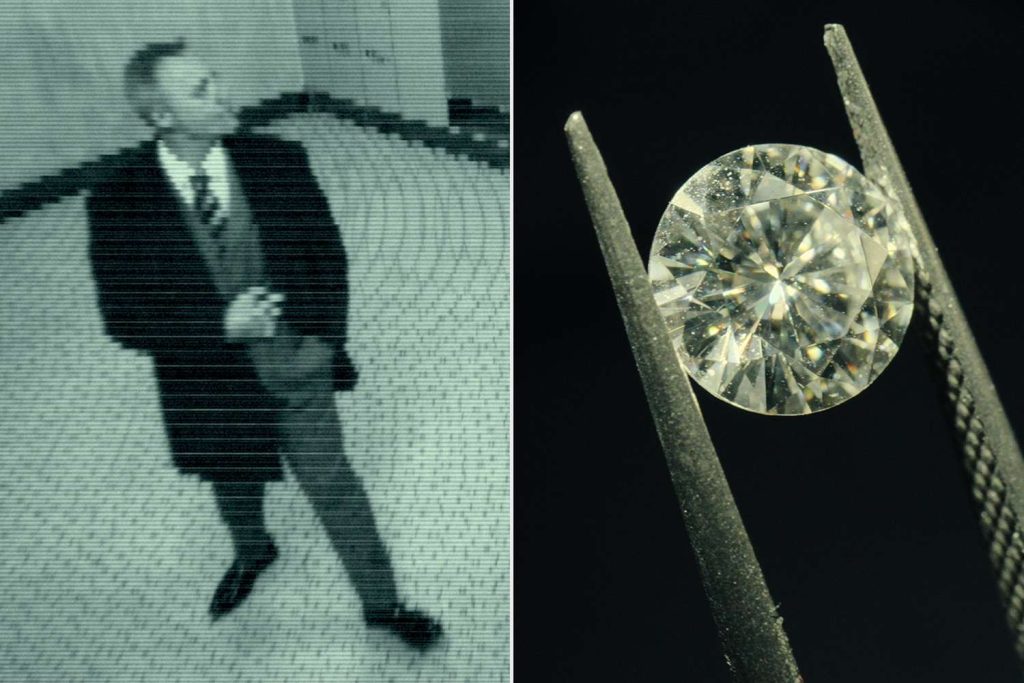
Led by Italian criminal Leonardo Notarbartolo, a crew of specialists known as “The School of Turin” spent two years planning the job. Notarbartolo rented an office inside the Diamond Centre, posing as an Italian gemstone trader to gain full security access badges and conduct detailed physical surveillance.
The Break-In
On the night of February 15, 2003, the crew bypassed every security system without triggering a single alarm. They emptied 109 of the 160 safety deposit boxes, escaping with over $$100\text{ million}$ in loose diamonds, gold bullion, and fine jewelry. Although Notarbartolo was eventually convicted after discarded trash containing DNA evidence was found in a nearby forest, the vast majority of the stolen diamonds were never recovered.
1. Central Bank of Iraq (2003) — The $920 Million State-Level Plunder
On March 18, 2003—just hours before Coalition forces initiated military strikes in Iraq—one of the largest single bank thefts in human history took place in Baghdad. Unlike traditional heists carried out by clandestine criminal syndicates, this operation was executed at the direct order of Qusay Hussein, the son of Iraqi President Saddam Hussein.
The Execution
Armed with a handwritten note signed by Saddam Hussein claiming that extracting the funds was necessary to save them from foreign capture, Qusay Hussein presented himself to the bank governor. Over the course of five hours, team members loaded dozens of massive wooden crates filled with $$100$ bills and Euros onto three heavy flatbed trucks.

The Aftermath
Approximately $$1\text{ billion}$ was hauled away in cash. Although Coalition troops later recovered around $$650\text{ million}$ hidden in brick walls inside one of Saddam’s palaces, roughly $$300\text{ million}$ vanished completely without a trace, cementing its position as the largest single currency theft in recorded history.
The Legacy of History’s Master Heists – Top 5 Biggest Robberies of All Time
Whether driven by state-level power plays, advanced technical infiltration, subterranean tunneling, or armed tactical strikes, these iconic heists demonstrate the extraordinary lengths to which criminal minds have gone to seize massive wealth.
While many of the masterminds eventually faced justice or imprisonment, the missing millions, unrecovered gemstones, and unsolved mysteries ensure that these legendary heists continue to fascinate historians, investigators, and true crime enthusiasts worldwide.